Friday, July 10, 2009

Curry culture of Asia

Unhappily, the query does not contain an easy answer. Whilst a lot of citizens consider that curry refers to a solitary spice called curry powder, establish in spice racks at the restricted supermarket, curry can in detail be dry or wet, a combination of dried out spices or a spiced sauce. There is a high-quality chance that the dish you are served up at a restaurant and won't hold curry leaves. It possibly will not even be sizzling

Record of Curry dust

Uncertainty engages back to the days of British colonialism. The tale goes says that a British officer, arranging to depart from India and deficient to enjoy his desired Indian dishes after he returned home, prepared his servant in the direction to prepare a mix of Indian spices. Thus, the detection of curry with a dry powder was born.

Curry in actuality

In order to comprehend the spot on nature of curry, it facilitates to know that the word comes from the Tamil kahri, which means "sauce". Right through Southeast Asia and India, curries are not spice unifies but a dish, one with a liquid, gravy-like consistency. Also, contrary to popular opinion, not every curry is exceedingly hot. This makes sagacity when you consider that, although curries have been a mainstay of Indian cooking for centuries, chili peppers are a New World fruit. Prior to the capsicum's introduction to Europe (and subsequently Asia) by Spanish and Portuguese explorers, the most pungent ingredient in a curry mix would have been black pepper.

Nowadays, there are four spices frequently institute in curry pastes and powders:

Chilies - the type used will affect the pungency of the dish; generally smaller chilies are hotter. The red and green curry pastes featured in Thai cooking are made with red and green chilies, respectively.

Turmeric - this is what gives many curries their yellow color.

Coriander - the seeds from the coriander plant, valued since ancient times for their rumored aphrodisiacal properties

Cumin - one of the world's oldest seasonings, it has a nutty flavor and is frequently used in spice blends

Although there are no hard and fast rules, at least three of these spices will be present in most curries.

"Curry is not a thing; it is a state of being."

Tuesday, July 7, 2009

Chineses cooking tips

Basically Chinese food is simple to cook. It doesn't need more tricks and traits. The only obligatory is to be done as possible and to get ready everything in advance before the actual cooking process starts. So before you begin try out with any recipes in your kitchen, organize all of the ingredients, measure them, slice up them, chop them, then place all the raw stuff in to the line beside the stove in the order in which they are to be added to the cooking pot. Many dishes, particularly stir fry ones, just do not allow time to turn around and scramble amid a chaos of half prepared ingredients.

The concealed secets of Chinese cooking lies, in fact in the preparation. Food is chopped, slices or cut according to certain planned rules. For really productive short-cooking dishes, all of the material should be cut or chopped to as near the same size as possible to guarantee that they are all cooked to the same degree. For very tender, almost velvet-textured meat, the meat should be shredded along the grain, for little bit crispy texture it should be sliced against. Somewhat frozen meat is much easier to slice into very thin strips in this way than meat at room temperature. Vegetable especially, are often sliced on the diagonal both for sensuous appeal and for regularity of cooking.

Friday, July 3, 2009

Salads from mainland china

Salad
In china salads are appreciated more than just a starter without the discrimination of being Hot or cold,

Chinamen have been got pleasure from the wholesome charge of a simple salad in view of the fact the ancient times, when they utilized salt to spice uncultivated plants and herbs. (In fact, the word salad comes from sal, the Latin for salt). On route, salads have advanced ever since those outlying days. In the present day, with toting up to greens, salads could be unruffled of vegetables, pasta, and fruit.

A number of them are further filling, holding meat, poultry, or cheese. Other up to date contraption embrace the Waldorf salad - an easy concoction of celery, walnuts, apples and mayonnaise - and the Caesar salad, believed to have been shammed by an Italian chef inhabiting in Mexico in the 1920's. At the same time as mainly salads are served cold, a small amount of, such as the German potato salad, are intended to be dollied out hot.

Up till, no matter what the ingredients have been, we’ll be accountable to assume of a salad as a form of entrĂ©e: handed round at the commencement of a meal and intended to soak our appetite for the main course. Except salads engage in recreation a diverse function in Asian cuisine. For one thing, the frequent assortment garden salad is mysterious in Asia. For a new, a salad such as a noodle salad may make up a complete meal. A salad is over and over again planned to make available a distinction or sense of balance with other dishes, given that the pleasant-sounding unification of consistency colors, and flavors is one of the characteristics of Chinese cuisine. The crispy texture of lightly washed-out vegetables may set of scales a soft noodle dish, for example. And, like a sorbet, a salad may be used to clear the palate after a particularly spicy dish.

One more perceptible attribute is the total of heed taken in the physical manifestation of a Chinese salad. As a proxy of being flipped in a bowl, salad vegetables - repeatedly blanched as a substitute of being left raw - are normally watchfully prearranged on a platter.

Vinaigrette and accompaniments are frequently used in Chinese salads. In actuality, in prehistoric times it is expected that the Chinese seasoned their plants with soy sauce in its place of salt. Several of the more familiar garnishes used to top salads are cilantro (Chinese parsley), peanuts, and chilies. Lime juice is a regular feature in dressings, while peanut and/or sesame oil are the most general oils used.

Tuesday, June 30, 2009

ASIAN FRUITS IN CHINA

A tremendously admired fruit, mangoes are full-fledged just about the world, from Mexico to Israel to Australia. In the United States, one can move toward transversely mango groves successful under Florida's sunny skies. The aromatic flavor of the mango is used to color up the whole lot from salads and desserts to drinks. In Asian cooking, mangoes mark drastically in salads and rice dishes.

Deciding over Mangoes

While choosing mangoes, one might stare for ones with unwrinkled skin that give up to calm weightiness (like a ripe peach). Unripe mangoes must ripen within a week at room temperature. Once ripened, mangoes could be kept in the refrigerator, but they must be eaten within a couple of days. Moreover, refrigeration tediousises their fragrant scent, so remember to leave them at room temperature for awhile before eating. One word of warning: be sure not to eat the mango skin. Primarily it looks as if not dangerous adequate by way of uniformity akin to the skin of an apple and a slightly mild flavor. Then the relish strikes you, and you without setback recognize why people submit to this as distress from "turpentine mouth."


Mangosteen

Mangosteen
Mangosteen are not normally grown outside Asia and Australia, as they are exceptionally tricky to grow and necessitate a tropical, humid climate. While in season, they are available at Asian/Chinese markets. The United States has lately raised a long-term ban on mangosteen bring in (due to concerns over likely fruit-fly contamination) to allow imports of irradiated mangosteen from Thailand.
When acquiring mangosteen fruit, look for ones that are dark purple or reddish purple but not blue-black in color. (Once home, it pays to look them over again carefully; I had a nasty experience recently when I discovered tiny ants living underneath the flower remnants). Mangosteens are commonly eaten raw as a dessert.

Lychees

Lychees

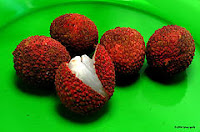
Preserved lychees are impatiently offered right through the year; depending on somewhere you live, you may also be able to procure unsullied lychees during the summer months when they are in season. (Like mangos, lychees thrive in Florida's warm climate). A little gourmand’s claim that there is no association flanked by fresh and canned lychees. While I wouldn't go that far, there is no doubt that fresh lychees have a stronger flavor, so try them if you can.
While choosing fresh lychees, check for a rosy looking skin. (Unlike mangos, lychees will not ripen extra after being harvested). At home, store them in a plastic bag in the refrigerator and eat within a week. Lychees are a popular dessert, and both mangos and lychees are old in Asian savory dishes.

Previous to eating fresh lychees, get rid of the stem and peel off the outer skin. Bear in mind that the shiny brown seed in the middle is also unpalatable and wants to be removed.

Wheras a mangosteen, the simplest technique is to place the mangosteen in the palm of your hands, with the flower stem on top, and employ your fingers to exert calm heaviness on it until it cracks open. one more alternative is to cut from side to side the diameter of the shell all the way around, and then purely lift off the top. Just remember not to cut through the segments.

Featured Asian Fruit Recipes:

Shrimp and Scallop Shu Mai in Spicy Mango Sauce
Mango Chicken Stir-fry
Pork With Lychees
Chinese Chilled Melon Fruit Salad With Mango and Papaya
Chinese Fruit Salad
Mango Pudding
Mango Ice Cream
Mango Muffins
Mango Lassi - a refreshing yogurt drink fron Northern India
Mango and Lemon Cream Cheese Tart - from About's guide to Australian Food.
Mango Smoothie With Yogurt - from About's Guide to Southern U.S. Cuisine
Pollo al Mango - Mango Chicken Italian-Style, from About's Italian Cuisine Guide
Mango Julius - a non-alcoholic "mocktail," from About's Guide to Cocktails.

Saturday, June 27, 2009

The Chinese all Spice Powder and the Five Elements hypothesis

Even nevertheless the precise origins of five-spice powder are mislaid to the past, there is a few reflection that the Chinese were putting efforts to make a "wonder powder" encompassing all of the five essentials. All of the five flavors - sour, bitter, sweet, pungent, and salty - are found in five-spice powder. Then again, it's possible that a cook accidentally stumbled upon this particular combination of spices, and realized its power to enliven the blandest dish. Whatever the case, there is no doubt that five-spice powder is unique.

Of course, these days the definite amalgamation of spices used to make up five-spice powder varies. In fact, a few brands could more correctly be labeled "seven-spice powder," since they contain seven ingredients. A average recipe calls for fennel, cloves, and cinnamon, along with star anise and Szechuan peppercorns. Nevertheless, you'll also locate five-spice powder made with cassia (a member of the same family as cinnamon), ginger, nutmeg, and even licorice (star anise has a wonderful licorice flavor). Sense free to experiment with different varieties until you find the one you like best.

Bottled five-spice powder can often be found at local supermarkets. Though, if at all possible, I would suggest acquire it from an Asian market. You'll pay a lesser amount and the spice combination will be more bona fide. An supplementary benefit is that it is normally packaged in plastic bags, agree to the aroma to come through and giving you a chance to compare brands before buying. At home, remove from the bag and store in a dry place in a sealed jar.

Below, a information related to is provided a basic recipe for five-spice powder, along with several dishes that make use of its powerful flavor. But don't limit your use of five-spice powder to specific recipes - add it whenever you want to lend flavor to stir-fries, soups and red-cooked dishes. It works well with meats, and makes an excellent marinade. (You'll sometimes find packages of five-spice marinade designed specifically for chicken in Asian markets). Just remember to use sparingly - a little goes a long way.

Thursday, June 25, 2009

Feng shui magic in Chinese cuisine

It’s amusing though but its true, foodstuff and Feng Shui go along together. You can accomplish superior force by optimizing the Feng Shui of your rations and by means of cooking linked stuff to your benefit. Fundamental steadiness, Yin/Yang stability, Aromatherapy, and opening to boost up affluence and profusion are every one of essential elements of Feng Shui along with fare.

Fundamental steadiness within victuals could be accomplished all the way through application of color. A plate jam-packed of monochromatic food might seem to be quite plain and in all probability wouldn't get a hold as seal of authorization as of a dietitian moreover (they habitually give advice a plate full of lots of dissimilar colors.) therefore a stir-fry prepared by yellow bell peppers, green bell peppers, orange bell peppers, red tomatoes, Chinese purple eggplant, and some pink shrimp would be at much enhanced Feng Shui variety. Fruits as well as vegetables appear into an collection of colors and apply them to your Feng Shui improvement. There isn’t any need for eating each color in the rainbow by the side of every meal, however further colors in your diet would go a long way towards optimizing your Feng Shui.

The perception of Yin and Yang in addition can affect to your food. In the midst of food, Yin would be the milder flavors whilst Yang would be the bolder flavors. Chinese recipes previously obtained a lead of this sort of Feng Shui balance. sugary and tart, sizzling and acerbic, and strapping flavored dishes harmonized along with basic rice are all examples of Yin/Yang balanced foods. whilst organizing these dishes the chef is at all times watchful to poise the conflicting zest. Sugary and Sour Shrimp that is all sweet or exceedingly sour wouldn’t be very enjoyable to the palate and wouldn’t be good Feng Shui. And coupling a peppery dish with other fiery dishes would overburden the savor buds. Yin and Yang can also be used to explain the appeal of dishes traiting a concoction of pliable or fragile foods with crusty or crisp foods. Tofu dishes with chopped nuts or diced water chestnuts always balance these textural differences. A plate full of crunchy food could tire the mouth, while a plate full of soft food might not seem very fulfilling. Balance is very important in food and Feng Shui.

Aromatherapy is very imperative in Feng Shui cause each and every senses need to be accommodated. Nothing is more agreeable to the nose than luscious stink foods. Imagine in relation to the odor when catering Chinese food. All and sundry in the house are acquainted by way of cooking when the house is filled with the scent of toasting Szechuan peppercorns. And what a joy it is to smell a grinder filled with ground Szechuan peppercorns (toasted or un-toasted.) Aromatic seasonings like garlic, scallions, chilies and ginger often go into the wok near the beginning of the cooking process so they can lend their scents and lightly stir-fried flavors to the main ingredients. Plus, they are a treat for the cook to smell and they fill the home with a wonderful aroma. These wonderful scents rid the home of negative energy and fill them, and you, with positive energy.

Saturday, June 20, 2009

Jujube- An exceptional and succulent fruit from China


Jujube has its origination form Chinese Jujube Tree (Chinese date), Ziziphus zizyphus. Chinese Jujube was pioneered properly in U.S. in the year 1908 by the USDA that traded in the most brilliant Chinese cultivars from China, Japan, Korea and Indochina. In relation to 50 of these trees were reputable at the University of GA Experimental Station underneath the regulation of the Mr. Otis J. Woodard at Tifton, GA and additional plantings were made in LA and CA.
The planting of atypical Chinese Jujube trees at Tifton, GA had rooted a large amount confined exhilaration and numerous Tiftonites endeavored unproductively to source the brushwood, and others seek placing the seeds of the Chinese jujube, but not an iota of the resultant plantlet formed jujube fruit as fine as the inventive trees established by the USDA. Mr. Otis J. Woodard, the appointed horticulturist, who implanted some of the limbs from the USDA imported Chinese jujube onto uncultivated sharp seedling rootstocks and disseminated a few of the spliced Chinese jujube trees to confined contacts, and other researchers at a range of farming stations right through the U.S.

Jujube Tifton woods were totally bulldozed in the mid-last century to create an opportunity for the research orchard pecan tree research plot. Lots of exclusive Chinese jujube cultivars were missing in the devastation of the jujube Tifton, GA orchard, but a number of them stayed alive in the back garden of Tiftonites, and expectantly other jujube trees are at rest rising at sprinkled position in the U.S.Jujube tree has been growing basically in each of the areas of the U.S., where the trees can endure frosty temperature as low down as -25 F. The jujube tree fabricates hefty crops of fruit each year, and the jujube tree has no acknowledged pest or syndrome troubles. The proceedings of Chinese archaeologists confirmed that the Chinese jujube trees have been cultured in China for about 4000 years.

On the other hand, further Internet observers say that the jujube in Ancient Israel, Syria and Jordan is definitely argued in several scriptural rhymes from the Holy Bible, together with the Book of Judges. The rigid occurrence of jujube in these earliest civilizations has been established, but the record is not lucid about the barbed plant illustrated in the Book of Judges, because precise plant nomenclature was not in existence until the botanist, Linnaeus, began to create rules for plant nomenclature.The jujube fruit that advanced in the prehistoric Mildeast societies does not have the fruit size or the quality that the Chinese developed in their assortment and promising hybridization. It is possible that the jujube that raise in the Mildeast today nurtures from seeds brought by antique processive traders from China and were deposited to breed and look up by selection in Syria, Jordan and Israel.

The Chinese jujube tree can live to tell the tale cold temperatures as low as -25 F, by the tree also prosper in the sultry heat of the Deep South. The jujube tree does not require a lot winter chilling to begin a profound crop of fruit, and the late flowering of the tree allows the bloom leading to fruit production resistance to late frosts in Northern States.The crisscross outline of the branch expansion is abnormal and seem to be bizarre in the winter on leafless branches, and the gnarled facade of the trunk and branches makes this tree a selective landscape tree for the gardener who is gazing for somewhat different, for something as an ornamental specimen of accent tree. The shiny leaves of the jujube tree are green, waxy and beautiful, reflecting light like small mirrors. The tree of the Chinese jujube grows a massive root system and care must be taken when digging under grafted jujube trees not to cut roots radiating from the jujube tree, or else a thorny insipid seedling of low fruit value will arise from the cut root just like in the case of crape myrtle tree.